Small rooms often get a bad reputation, but size alone does not determine how comfortable or functional a space feels. The way our brain interprets light, proportion, movement, and boundaries plays a huge role in whether a room feels open or cramped.
With thoughtful design choices, even the most compact spaces can feel calm, spacious, and beautifully balanced. Here is how the science of space works, and how you can use it to your advantage.
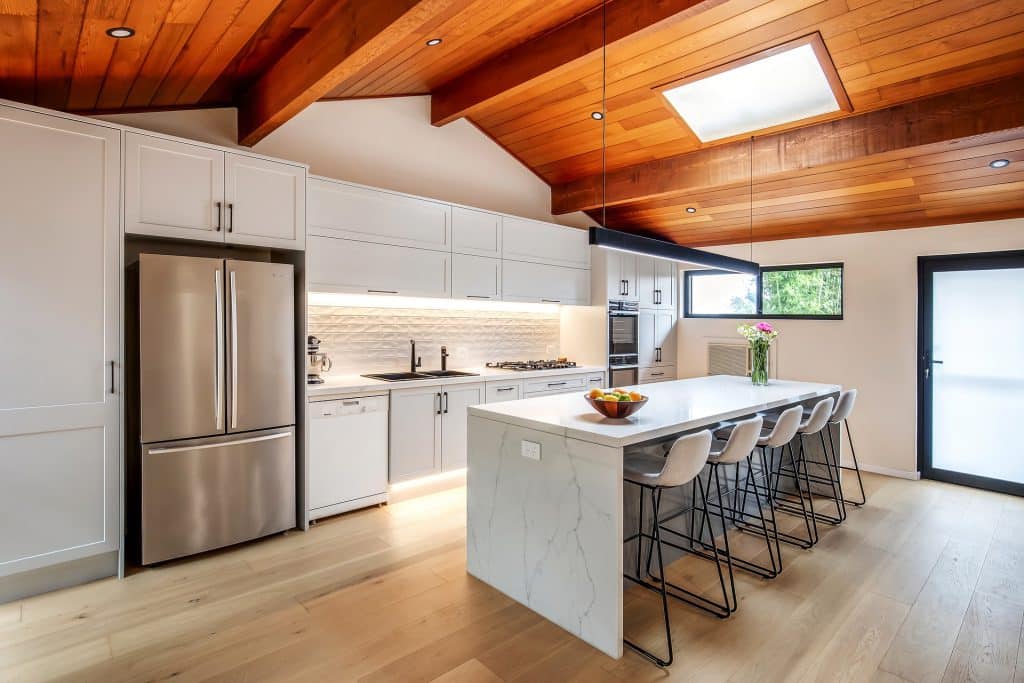
How The Brain Reads Space
Our brains rely on visual cues to understand scale. When a room feels cluttered, dark, or visually broken up, the brain interprets it as smaller than it actually is. Conversely, when lines are clear, light moves freely, and visual interruptions are reduced, the space feels larger and easier to inhabit.
Designing for small rooms is really about reducing visual noise and helping the eye travel smoothly through the space.
Light Is Your Most Powerful Tool
Natural light instantly expands how a room feels. The more evenly light is distributed, the more open the space appears.
If natural light is limited, layered lighting makes a significant difference. Instead of relying on a single ceiling light, combine ambient lighting with wall lights or subtle task lighting. This reduces harsh shadows that visually shrink a room and creates depth.
Light-coloured walls, ceilings, and even floors help bounce light around the space, reinforcing that sense of openness. This does not mean everything must be white. Soft neutrals, warm greys, muted pastels, and gentle earth tones all work beautifully.
Visual Continuity Matters
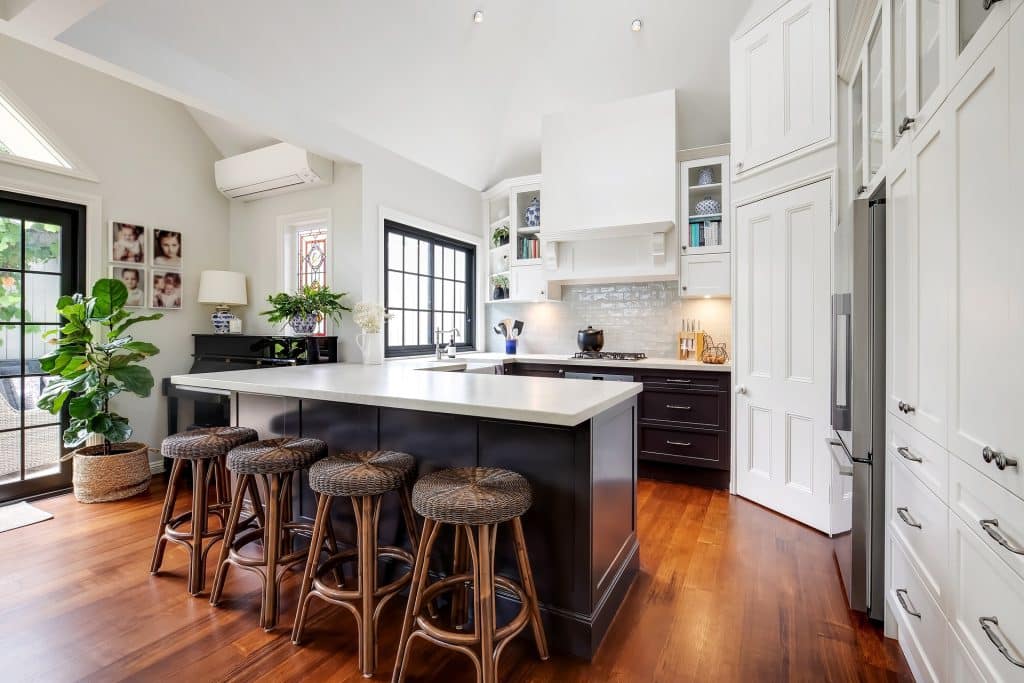
When the eye can move uninterrupted, a room feels larger. This is why continuity in materials and colours is so effective in small spaces.
Using the same flooring throughout adjoining rooms creates flow and removes visual breaks. Similarly, keeping wall colours consistent or within the same tonal family helps rooms feel connected rather than boxed in.
Where contrast is used, it should be intentional and minimal. Too many competing colours or finishes break up the space visually and make it feel smaller.
Furniture Scale & Placement
Oversized furniture overwhelms a small room, but furniture that is too small can also make the space feel awkward and cluttered. The key is proportion.
Choose pieces with clean lines and visible legs. When furniture is lifted off the floor, the eye can see more of the room, creating a sense of openness. Floating vanities, wall-mounted shelves, and slim-profile sofas are all excellent choices.
Equally important is placement. Leaving clear pathways allows movement to feel effortless, which psychologically increases the sense of space.
The Strategic Use of Mirrors
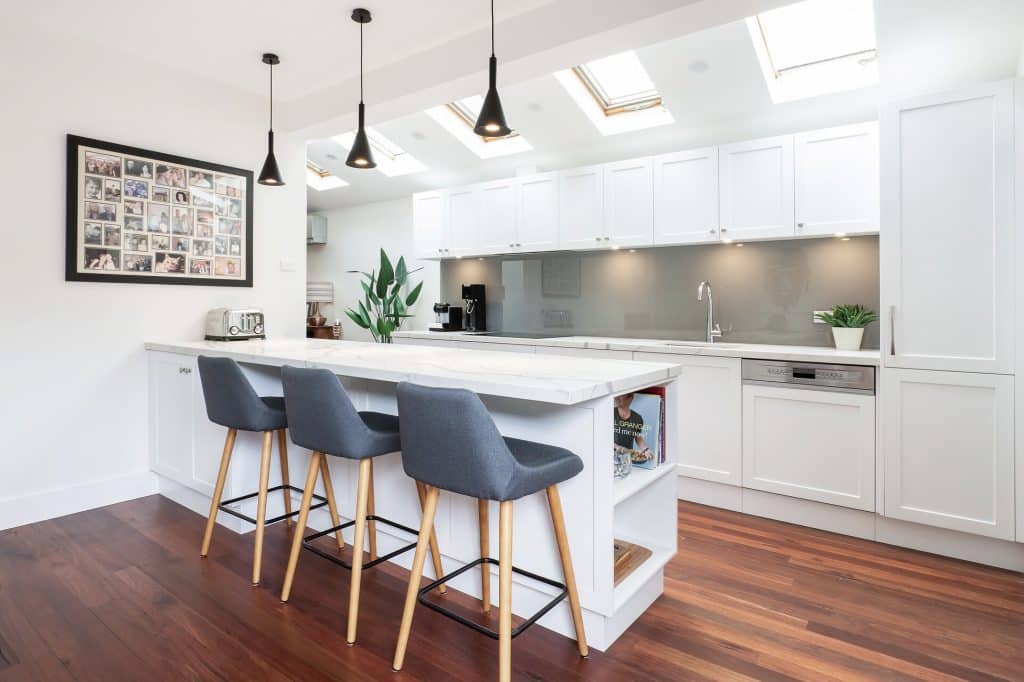
Mirrors are one of the most effective tools for expanding a room visually. They reflect light, extend sightlines, and create the illusion of depth.
Placing a mirror opposite or adjacent to a window amplifies natural light. Large mirrors work particularly well in narrow spaces such as hallways, bathrooms, or compact living areas, where they can visually double the width of a room.
Storage Without Clutter
Clutter is one of the fastest ways to make a room feel small. Smart storage solutions keep necessary items accessible while maintaining visual calm.
Built-in storage, especially when it blends into the wall colour, reduces visual disruption. Vertical storage draws the eye upward, making ceilings feel higher and rooms feel larger.
Closed storage tends to work better than open shelving in small spaces, as it hides visual clutter and keeps the room feeling serene and intentional.
Ceiling Height & Vertical Lines
Even if your ceiling height cannot be changed, you can influence how tall it feels.
Vertical lines, whether through panelling, tall cabinetry, or elongated artwork, guide the eye upward. Hanging curtains closer to the ceiling rather than directly above the window frame also creates the illusion of height.
Keeping ceilings light in colour further enhances this effect, helping the room feel airy rather than compressed.
Less Really Is More
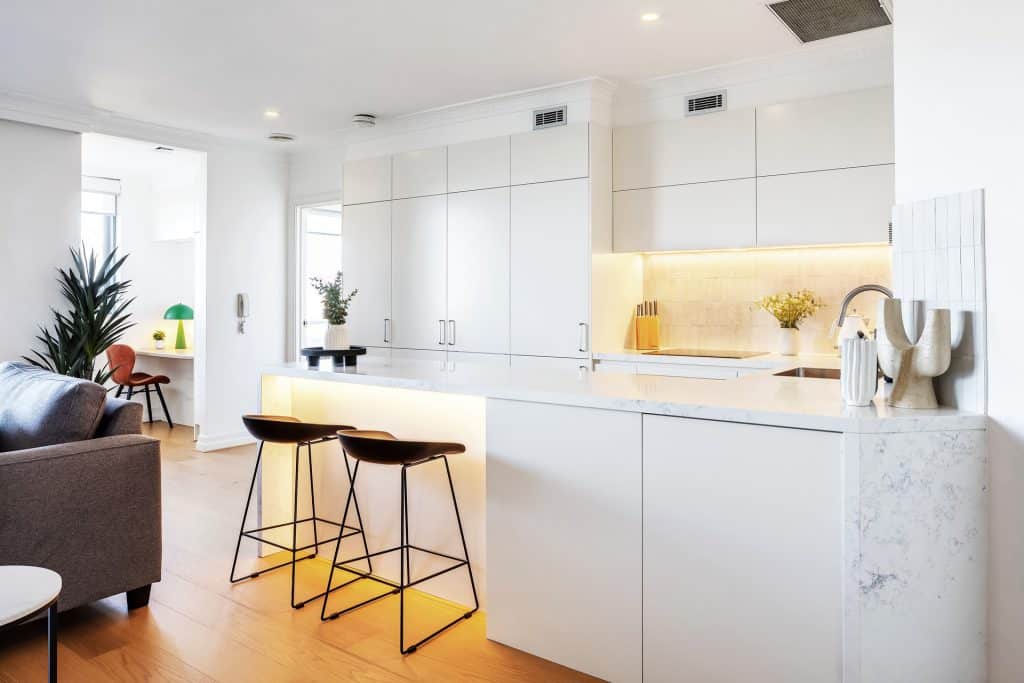
Small rooms thrive on restraint. Each element should serve a purpose, either functional or aesthetic.
By editing what you include and focusing on quality over quantity, the space feels curated rather than crowded. This sense of intention is what ultimately makes a room feel generous, regardless of its size.
Contact Nouvelle About Your Renovation
Making a small room feel bigger is not about trickery. It is about understanding how people experience space and designing in a way that supports ease, flow, and clarity.
If you approach small spaces with intention and an understanding of how the brain interprets them, you will often find they become some of the most comfortable and impactful rooms in the home.
For more design tips and inspiration, head over to our News section or explore our Projects gallery to see how we’ve helped others create their dream homes.
Because when it comes to flooring, you’re not just walking on it, you’re building the foundation for how your home looks and feels. Let’s make it perfect together!
Our state-of-the-art Business Management System, unique to Nouvelle, allows us to operate with a level of scheduling expertise that sets us apart from other providers. It takes the headache out of your renovation, so you enjoy your new space without the stress.
If you enjoyed our post, let us know your thoughts on our Facebook Kitchen Renovation and Design Ideas group!
If you have questions about your renovation or remodel and want to know how to make a statement in your home, contact us at Nouvelle.