Natural light can completely change a kitchen. It brings warmth to materials and makes colours feel richer. Even an ordinary breakfast can feel more enjoyable when the room is filled with beautiful natural light.
The challenge is that natural light moves, changes with the seasons and eventually disappears altogether.
Artificial light works differently. It needs to step in when daylight cannot provide enough illumination, support the practical work in the kitchen. Creating an inviting atmosphere after dark. Get the balance right, and the transition from a bright morning to an evening meal feels effortless.
Good kitchen lighting is not about choosing between natural and artificial light. It is about designing both to work together.
Start With the Light You Already Have
Before adding lighting, it is worth understanding how natural light behaves in the room throughout the day. A kitchen that feels bright at 10am may become considerably darker by late afternoon, while direct sunlight can create glare and heat at particular times.
Windows, skylights and glazed doors can bring valuable daylight into a kitchen, but their position matters just as much as their size. The direction the room faces, nearby buildings and landscaping can all influence how much natural light actually reaches the interior.
Looking at these conditions early in the design process allows the layout to make better use of the available daylight rather than trying to compensate for poor planning later.
Think About Where You Need Light Most
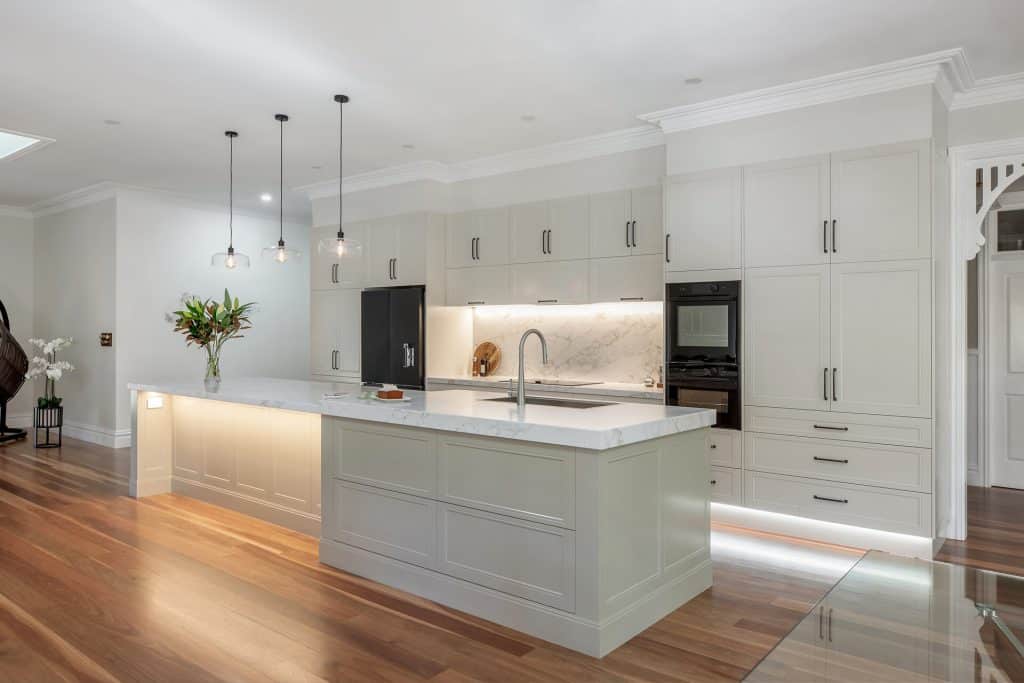
A kitchen needs light for much more than simply illuminating the room. Benchtops require clear, practical lighting for food preparation. Cooking areas need enough visibility to work safely, while sinks, pantry interiors and other frequently used spaces can benefit from their own carefully positioned light sources.
Relying on a single central fitting can leave shadows exactly where you do not want them. This becomes particularly noticeable when you stand between an overhead light and the benchtop you are trying to use.
Task lighting positioned closer to the work surface can solve this problem. Under-cabinet lighting is one option, providing useful illumination across preparation areas without filling the entire room with unnecessary brightness.
Layer Artificial Light
Rather than expecting one type of lighting to do everything, a well-designed kitchen usually benefits from several layers.
General lighting provides overall illumination and allows you to move comfortably through the room. Task lighting concentrates light where practical work happens, while decorative or accent lighting can highlight architectural features, cabinetry or materials.
Pendant lights above an island can contribute to more than one layer, offering useful illumination while also becoming part of the visual character of the kitchen. Integrated lighting within cabinetry or shelving can create a softer effect when strong task lighting is no longer required.
These different sources give you greater control over the room and allow the lighting to change according to what you are doing.
Consider Colour Temperature
Not all white light looks the same. Some artificial lighting has a warmer appearance, while other sources produce a cooler, crisper white.
The choice can significantly affect how kitchen materials and colours appear. Warm lighting may enhance timber and create a relaxed atmosphere, while cooler light can feel sharper and more functional. Neither is automatically better; the right choice depends on the materials, surrounding rooms and overall character of the home.
Consistency is important too. Mixing noticeably different colour temperatures within the same sight line can make an otherwise beautifully resolved kitchen feel disjointed.
Viewing finishes under the type of lighting they will experience at home can also prevent surprises. A cabinet colour that looks perfect in bright showroom lighting may appear quite different in softer evening light.
Don’t Let Daylight Create Glare
More natural light is not always better. Large windows and expanses of glass can introduce glare, particularly when sunlight reflects from polished benchtops, glossy cabinetry or other reflective surfaces. Strong direct sun may also affect comfort at certain times of day.
The solution is not necessarily to reduce the amount of daylight. Window positioning, shading, material selection and orientation can all help manage it more effectively.
Considering natural light alongside the finishes allows you to enjoy a bright kitchen without creating a space that becomes uncomfortable whenever the sun reaches a particular angle.
Let Lighting Change With the Day
The amount and type of light you need at breakfast is unlikely to be the same as what you want while entertaining in the evening.
During the day, natural light may provide most of the general illumination, with task lighting used only where needed. As evening approaches, artificial lighting gradually takes over. Later, you may prefer softer lighting around the island or cabinetry rather than keeping every light in the kitchen at full brightness.
Separate circuits and dimmers can make this flexibility much easier to achieve. Instead of having a simple choice between bright and dark, you can adjust different parts of the kitchen to suit the activity and atmosphere.
This flexibility becomes particularly valuable in open-plan homes, where kitchen lighting remains visible from dining and living areas long after cooking has finished.
Think Beyond the Kitchen
A kitchen rarely exists visually on its own, particularly in contemporary homes. Lighting choices should therefore consider the adjoining spaces as well as the cabinetry and benchtops directly beneath them.
A brightly illuminated kitchen beside a softly lit living area can feel disconnected at night. Conversely, carefully coordinated lighting can help the kitchen settle naturally into the wider room once its practical work is finished.
Pendant styles, colour temperature and the intensity of different light sources can all contribute to that relationship. The aim is not to make every space identical, but to ensure they feel like parts of the same home.
Plan Lighting Before the Kitchen Is Built
Lighting is much easier to get right when it is considered early. Cabinetry dimensions affect where under-cabinet lighting can sit. Island proportions influence pendant placement, while appliance positions, work zones and ceiling details can determine where downlights will be most useful. Electrical requirements also need to be resolved before walls and ceilings are finished.
Leaving these decisions until the end can limit your options or result in lights being positioned according to what is easiest to install rather than where they will perform best.
Contact Nouvelle About Your Renovation
At Nouvelle, we consider lighting as part of the overall kitchen design. Natural light, cabinetry, materials, layout and artificial lighting all influence one another, and bringing those elements together early creates a much more considered result.
The best kitchen lighting rarely calls attention to how clever it is. You simply have enough light where you need it, softer illumination when you want it and a kitchen that feels equally inviting in the first light of morning and well into the evening.
For more design tips and inspiration, head over to our News section or explore our Projects gallery to see how we’ve helped others create their dream homes.
Our state-of-the-art Business Management System, unique to Nouvelle, allows us to operate with a level of scheduling expertise that sets us apart from other providers. It takes the headache out of your renovation, so you enjoy your new space without the stress.
If you enjoyed our post, let us know your thoughts on our Facebook Kitchen Renovation and Design Ideas group!
If you have questions about your renovation or remodel and want to know how to make a statement in your home, contact us at Nouvelle.